
Dallas Slip and Fall Accident Lawyer
Has a wet floor, broken stairs, or poorly-maintained property left you or a loved one with painful injuries and mounting bills?
A slip or trip can happen in an instant, but the consequences can last for years. Serious injuries like broken hips, spinal damage, and traumatic brain injuries require surgery and long-term rehabilitation. A broken wrist can leave you unable to work and provide for your family. And the risk of chronic pain can make it difficult to return to normal activities.
If your fall was caused by someone else’s negligence, it shouldn’t be on you to handle the financial consequences of your accident. With Charlie Waters Law, you have a Dallas slip and fall accident lawyer who fights for just compensation needed to support your recovery. We prepare your case and advocate for your rights, whether it’s in a negotiation meeting or, if needed, in court.
One Fall. Lasting Injuries. Changed Lives.
NO FEES UNLESS WE RECOVERY FOR YOU
- ZERO Fees Until We Recover for You
- FREE Consultations to Assist You with All Questions
- ZERO Obligation in Talking With Us. That’s totally free.
We want to answer your questions! We’re here to help.
WE WILL HELP YOU
- Understand the Texas Statutes That Apply to Slip and Fall Cases
- Understand How We Will Build Your Claim: Step-by-Step
- Get a Maximum Recovery for Your Claim
No Shortcuts. No Discounts.
Your injuries are real. Your losses are real.
And we don't believe in discounting either one.
Understanding Contingency Fees
Leveling the Playing Field
When you’ve been seriously injured, you’ve already got enough to worry about. Medical bills are piling up, you may be out of work, and the last thing you need is another bill from a lawyer. Meanwhile, insurance companies have plenty of money to hire teams of attorneys to protect their interests. That’s where a contingency fee helps level the playing field.
Here’s how it works. At Charlie Waters Law, you don’t pay a retainer, you don’t get billed by the hour, and you won’t receive monthly legal bills. Instead, we receive an agreed percentage of whatever compensation we recover for you. We also advance the expenses necessary to investigate and pursue your case…. all of them.
If we don’t recover anything for you, you don’t owe us attorney’s fees or reimbursement of case expenses. We take the financial risk, putting our time, experience, and resources to work for you without asking you to pay as the case moves forward.
That’s what makes a contingency fee such a good arrangement for injured people. It gives you access to experienced, high-quality legal representation without having to worry about how you’re going to pay for it. You can concentrate on getting better while we concentrate on your case.
What happened with your slip and fall injury and how can we help you?
A Personal Message to Slip and Fall Accident Victims and Their Families from Charlie Waters
One Fall. Lasting Injuries. Changed Lives
A slip and fall accident can happen in an instant, often in a place where you have every reason to expect safe conditions. Whether you’re shopping at a grocery store, visiting a business, walking through a parking lot, or entering an apartment building, you shouldn’t have to worry about dangerous conditions that could cause a serious injury. Wet floors, broken stairs, uneven walkways, poor lighting, and neglected property maintenance can turn an ordinary day into a life-changing event. When property owners fail to address dangerous conditions, innocent people can suffer devastating consequences.
I’ve represented people whose lives have been changed by serious injuries for more than four decades, and I understand that a fall is not always a minor accident. Broken hips, spinal injuries, traumatic brain injuries, and other serious conditions can require surgery, lengthy rehabilitation, and sometimes lifelong medical care. For older adults, a serious fall can mean the loss of independence they have worked a lifetime to maintain. Families may suddenly face enormous medical expenses, lost income, and the responsibility of caring for someone they love.
Slip and fall cases present particular legal challenges. Property owners and their insurance companies frequently argue that the dangerous condition was obvious, that they had no knowledge of it, or that the injured person should have been more careful. Successfully pursuing these cases requires a thorough investigation, careful preservation of evidence, and a clear understanding of the legal duties property owners owe to visitors. Surveillance footage, maintenance records, witness statements, and evidence of prior complaints can be critical to establishing responsibility.
At Charlie Waters Law, we understand that proving negligence is only part of our responsibility. We must also demonstrate the full extent of your injuries and how they have affected your health, independence, livelihood, and future. My experience with traumatic brain injuries, spinal injuries, and other catastrophic conditions is particularly valuable when a fall results in permanent disability.
If you or someone you love has been seriously injured because of a dangerous property condition, my staff and I are here to listen, answer your questions, and help you understand your legal options. You deserve compassion, experienced representation, and a legal team committed to protecting your rights, pursuing accountability, and securing your future.
Charlie Waters
Founder, Charlie Waters Law
Texas Brain Injury Law Center

What You Should Know...
Texas Slip and Fall Laws: Property Owner Duties, Visitor Status, and Legal Defenses
A serious slip and fall accident does not automatically establish that a property owner was negligent. Texas premises liability law requires proof that a dangerous property condition caused the injury and that the defendant breached a legal duty owed to the injured person. The extent of that duty depends largely on why the person was on the property.
Texas law generally recognizes three categories of visitors:
- Invitees: Customers, business visitors, and others entering for purposes that qualify for invitee status. Property owners must generally exercise reasonable care to protect invitees from unreasonably dangerous conditions they knew or reasonably should have discovered, when the danger was not known or obvious to the invitee.
- Licensees: Social guests and others entering with permission but without invitee status. Owners generally must warn of or make safe dangerous conditions they actually know about when the licensee does not.
- Trespassers: Persons entering without permission. Owners generally owe them only a limited duty not to injure them willfully, wantonly, or through gross negligence, subject to important exceptions.
To establish a typical invitee’s premises liability claim, the injured person must prove that the owner had actual or constructive knowledge of an unreasonably dangerous condition, failed to exercise reasonable care, and thereby caused the injury.
Premises liability differs from ordinary negligence. When an injury results from a dangerous property condition, premises liability principles generally apply. When it results directly from someone’s ongoing negligent activity, ordinary negligence principles may apply. The Texas Supreme Court explained this distinction in United Scaffolding, Inc. v. Levine.
Property owners frequently defend these cases by arguing that the danger was open and obvious, that they lacked notice of the condition, or that the injured person was partly responsible. Under Austin v. Kroger Texas, L.P., open-and-obvious dangers generally limit the owner’s duty to invitees, although exceptions exist.
Texas also applies proportionate responsibility rules that may reduce or bar recovery. Traditional implied assumption of risk is generally not a separate complete defense.
Successfully pursuing a slip and fall claim requires establishing the owner’s legal duty, proving the dangerous condition and the owner’s knowledge of it, and demonstrating how the negligence caused the injuries.
What Should You Do Immediately After a Slip and Fall Accident? Preserving Critical Evidence
The evidence needed to prove a slip and fall case can disappear within minutes. A spilled liquid may be cleaned up, a foreign object removed, or a broken stair repaired before anyone investigates. Once that happens, proving exactly what caused the fall can become extremely difficult.
After receiving necessary medical attention, photograph or video the dangerous condition as soon as it is safe to do so. Take close-up photographs of the spill, debris, broken flooring, uneven pavement, or other hazard, along with wider photographs showing the surrounding area. Include any warning signs, lighting conditions, and nearby obstructions.
Eyewitnesses can be just as important as photographs. Obtain the names and contact information of anyone who witnessed the fall, observed the dangerous condition beforehand, or heard employees acknowledge the problem.
Report the accident to the property owner or manager and request that an incident report be prepared. Preserve your shoes, clothing, photographs, and other relevant evidence. Avoid guessing about how the accident occurred when giving your account.
Many businesses use surveillance cameras, but recordings may be automatically overwritten. An attorney can promptly send a preservation letter requesting that the business retain surveillance footage, inspection records, maintenance logs, incident reports, and other relevant evidence.
Texas law often requires proof that a property owner knew or should have known about the dangerous condition. In Wal-Mart Stores, Inc. v. Reece, the Texas Supreme Court emphasized the importance of evidence showing how long a temporary hazard existed.
Photographs, eyewitness testimony, and promptly preserved records can make the difference between proving a dangerous condition and having no reliable evidence of what caused the fall.
Wet Floors, Foreign Objects, and Dangerous Walkways: How Do You Prove the Property Owner Knew (or “Should Have Known”) About the Hazard?
One of the most difficult issues in a Texas slip and fall case is proving that the property owner knew, or reasonably should have known, about the dangerous condition. The evidence needed often depends on whether the hazard was temporary or more permanent.
Temporary hazards, sometimes called transitory conditions, include spilled liquids, dropped merchandise, food on grocery store floors, and other foreign objects. These conditions may appear suddenly and disappear just as quickly.
Under Texas law, an injured invitee generally must establish that the owner created the condition, actually knew about it, or that it existed long enough that the owner reasonably should have discovered it. In Wal-Mart Stores, Inc. v. Reece, 81 S.W.3d 812 (Tex. 2002), the Texas Supreme Court emphasized the importance of evidence concerning the length of time a temporary hazard existed.
Static conditions include broken stairs, uneven sidewalks, damaged flooring, and deteriorated walking surfaces. Because these conditions may exist for extended periods, maintenance records, previous complaints, inspection reports, and photographs can help establish the owner’s knowledge.
However, proving that a condition existed is not enough. The injured person must also establish that it presented an unreasonable risk of harm and caused the injury.
Surveillance recordings, eyewitness testimony, employee statements, and maintenance records can be essential to proving these elements.
The distinction between temporary and permanent hazards is important because it often determines what evidence is needed to establish the property owner’s responsibility.
Serious Injuries from Slip and Fall Accidents: Brain Injuries, Hip Fractures, and Spinal Damage
A slip and fall accident may seem relatively minor until the full extent of the injuries becomes apparent. Falls can cause devastating injuries, particularly among older adults, whose bones may be more fragile and whose recovery can be especially difficult.
Traumatic brain injuries are among the most serious consequences of a fall. A person who strikes their head may suffer a concussion, intracranial bleeding, or other neurological damage. Symptoms such as headaches, memory problems, dizziness, and cognitive difficulties may persist long after the accident. Importantly, a normal CT scan does not necessarily exclude a traumatic brain injury.
Hip and pelvic fractures are also common concerns, particularly for older adults. These injuries may require surgery, hospitalization, and extensive rehabilitation. Some patients never fully regain their previous mobility or independence.
Falls can also cause spinal fractures, herniated discs, nerve damage, shoulder injuries, and broken wrists. In severe cases, victims may experience chronic pain, permanent physical limitations, or an inability to return to work.
The consequences often extend far beyond the initial medical bills. Injured individuals may require future surgeries, physical therapy, home modifications, mobility assistance, or long-term personal care. Family members may become caregivers, creating additional emotional and financial burdens.
At Charlie Waters Law, our experience with traumatic brain injuries, spinal injuries, and other catastrophic conditions helps us understand the medical evidence and demonstrate how a serious fall can permanently change a person’s life.
A successful injury claim must account not only for the immediate injury, but also for its lasting effects on the person’s health, independence, earning capacity, and future.
Can a Property Owner Blame You for Falling? Understanding Texas Slip and Fall Defenses
When someone suffers a serious slip and fall injury, property owners and insurance companies frequently argue that the injured person was partly or entirely responsible. Understanding these defenses is important because they can substantially affect the outcome of a premises liability claim.
One common defense is that the dangerous condition was open and obvious. Under Texas law, property owners generally have no duty to warn invitees about dangers that are readily apparent or already known to them. However, exceptions may apply when the injured person had no reasonable alternative but to encounter the hazard or when other recognized circumstances create a duty. The Texas Supreme Court addressed these principles in Austin v. Kroger Texas, L.P..
Another common defense is that the property owner had no actual or constructive knowledge of the dangerous condition. This argument is particularly important in cases involving temporary spills or foreign objects.
Property owners may also argue that the injured person was distracted, ignored warning signs, wore inappropriate footwear, or otherwise failed to exercise reasonable care.
Under Texas Civil Practice and Remedies Code § 33.001, an injured person’s compensation generally is reduced by their percentage of responsibility. If that responsibility exceeds 50%, recovery is barred in cases governed by Chapter 33.
Although traditional implied assumption of risk is generally no longer a separate complete defense, evidence that someone knowingly encountered a hazard may remain relevant.
These defenses do not automatically defeat a slip and fall claim. A careful investigation can establish what the property owner knew, whether reasonable precautions were taken, and whether the injured person’s conduct actually contributed to the accident.
Decades of Advocating for Fall Injury Victims
Property owners and their managers have a duty to keep their premises reasonably safe. At Charlie Waters Law, we hold them accountable for accidents that could have been prevented by taking reasonable measures.
We work with victims who are faced with the financial burden of piling medical expenses and lost income. Since 1981, we’ve seen how insurance adjusters try to downplay the severity of their injuries or pressure them into accepting a lowball settlement offer.
As your Dallas slip and fall accident attorney, our job is to take over the legal burden and fight for the outcome you deserve.
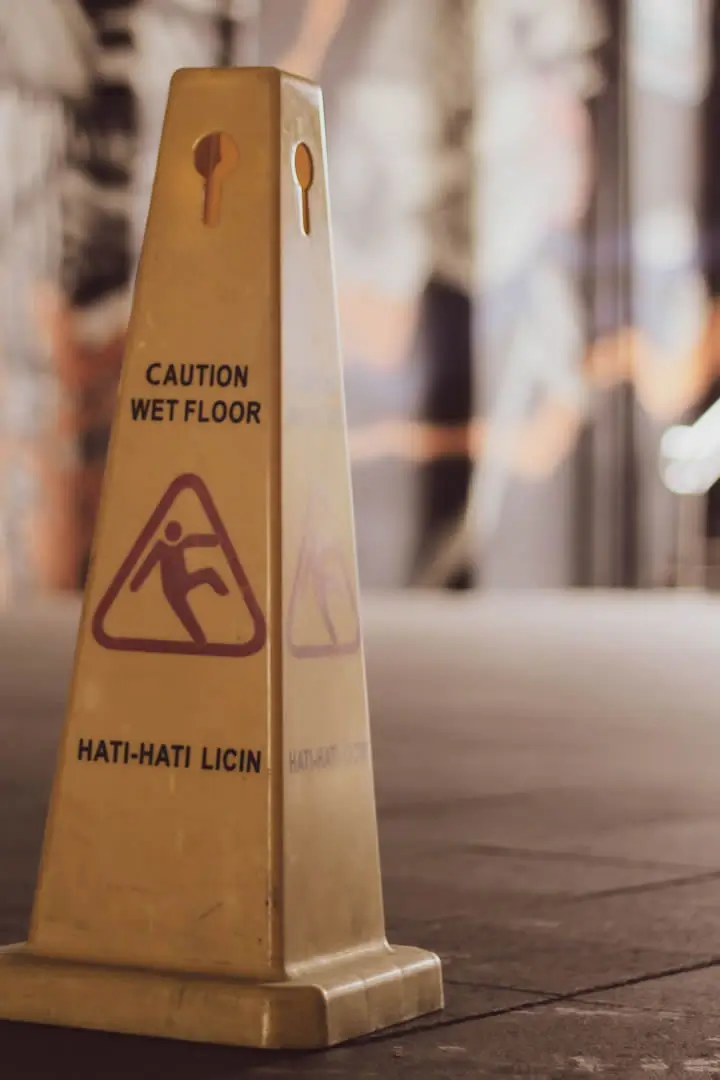
Proving Property Owner Liability Under Texas Premises Law
Not everyone who trips or falls on someone else’s property can file a personal injury claim. To prove liability, you must prove that an owner knew about dangerous conditions on their property and did nothing to fix them, leading to your accident.
However, this doesn’t necessarily mean that you are out of options if the owner claims they didn’t know about the hazard.
Slip and fall claims in Texas may involve:
- Invitee Standard: If you were on the property for a business purpose, the owner owed you a duty to use reasonable care. You must show the owner had actual or constructive knowledge of the hazard, meaning it existed long enough that a reasonable inspection would have discovered it.
- Licensee Standard: If you were a social guest, the owner generally must have had actual knowledge of the danger, and you must show you were not aware of it yourself.
In some cases, other parties may share responsibility. For example, a property management company or a contractor could be liable if they controlled the area where the fall occurred.
Our Dallas slip and fall accident lawyers can thoroughly investigate the details of the fall. We work to establish liability and challenge attempts by the property owner’s insurance company to deny your claim, shift blame, or minimize your injuries.
Free Medical and Legal Resources for Slip and Fall Victims
Charlie Waters Law offers guides and community support directories to help during this time. Learn about the process, find out how to respond to insurance adjusters who contact you directly, and seek support groups to better come to terms with your situation.
“We will work tirelessly to identify every party responsible for your injuries."
“No two brain injuries are alike. Because they can affect people in such different ways, there is no “standard” approach. We carefully develop each brain injury case knowing the uniqueness of the injury and the person. That takes understanding…and experience.”
CHARLIE WATERS

Do You Have a Slip and Fall Case?
You may be able to pursue a slip and fall lawsuit or insurance claim under these situations:
You were lawfully on the property, such as shopping at a store, dining at a restaurant, staying at a hotel, or visiting an apartment complex.
You slipped on a spill, wet floor, or ice, or tripped over damaged flooring, loose mats, uneven pavement, or clutter in a walkway.
The area had poor lighting, missing handrails, broken stairs, or no warning signs posted near the hazard.
The fall resulted in serious injuries requiring emergency care, surgery, physical therapy, or ongoing treatment.
Your recovery required time off work, resulting in lost wages or reduced earning capacity.
The property owner’s insurance company denied your claim, blamed you for the fall, or offered an unfair, early settlement.
When a preventable fall alters your health, a Dallas slip and fall accident attorney can give your family a much better understanding of where you stand legally. We’ll guide you through what steps to take next.

Recoverable Losses After a Slip and Fall Accident
Severe falls can have financial consequences that extend beyond the initial emergency room visit. If you see a long or indefinite recovery period that can affect your quality of life, Texas civil law allows you to seek both economic and non-economic damages, including:
- Emergency medical treatment and inpatient hospital stays
- Surgical procedures
- Prescription medications
- Expected future care, including physical therapy, rehabilitation, and in-home assistance
- Psychological counseling and ongoing mental health treatment
- Lost income and diminished future earning capacity
- Physical pain, suffering, and mental anguish
- Physical impairment and temporary or permanent loss of mobility
- Damaged personal items, such as broken eyewear, phones, or clothing

Mr. Waters is a truly devoted and wonderful individual who just happens to be a very wise attorney, and I highly recommend him to anyone needing legal services regarding traumatic brain injuries. If you need someone to put a voice to your suffering, who paints a complete picture of what you’ve been through, you will have found the perfect person in Charlie. His extensive knowledge and education in this area of law is unparalleled, and no wonder he is ranked among the top in the nation.
M. BENOIT
Former Client
OUR APPROACH
How Our Dallas Slip and Fall Law Firm Fights for You
1
Determine Your Claim
During your first consultation, we’ll discuss how the fall happened, the resulting medical effects, and its impact on your life to determine your options moving forward.
2
Build Your Case
Our team explores different avenues to secure evidence, including surveillance footage, incident reports, and witness interviews.
3
Advocate for Your Rights
Once we determine the present and future impact of your losses, we represent you in settlement negotiations or, in case of unfavorable results, before a jury.

Dallas Slip and Fall Lawsuit FAQs
Seek medical attention for your injuries. If possible, photograph or video the dangerous condition before it is cleaned up, repaired, or removed. Take pictures of the surrounding area, including warning signs or their absence. Obtain the names and contact information of witnesses, report the accident to the property owner or manager, and request a copy of the incident report. Preserve the shoes and clothing you were wearing. Because critical evidence can disappear quickly, contacting an attorney promptly is particularly important.
In a typical Texas slip and fall case involving a business visitor, you must establish that an unreasonably dangerous condition existed, the property owner knew or reasonably should have known about it, and the owner failed to exercise reasonable care to protect you. You must also prove that the dangerous condition caused your injuries. Photographs, surveillance recordings, witness testimony, maintenance records, and prior complaints can be essential to establishing these elements.
Grocery store accidents frequently involve spilled liquids, dropped merchandise, food, or other temporary hazards. Under Texas law, proving that a dangerous condition existed is generally not enough. You must also establish that the store created the hazard, actually knew about it, or that it existed long enough that employees reasonably should have discovered it. Surveillance footage, employee statements, eyewitnesses, and inspection records can be critical evidence.
Potentially, yes. Injuries occurring at a private residence may be covered by the homeowner’s or renter’s liability insurance, depending on the policy and circumstances. However, the homeowner is not automatically responsible simply because the accident occurred on their property. Texas law generally treats social guests as licensees, which affects the owner’s legal duties. We understand the personal sensitivity of these claims and work to handle them professionally while minimizing unnecessary friction between family members or friends.
Broken stairs, deteriorated sidewalks, loose flooring, and uneven walking surfaces can create dangerous conditions. These more permanent hazards may have existed long enough for the property owner to discover and correct them. Photographs, maintenance records, prior complaints, and evidence of earlier repairs may help establish responsibility. Liability depends on who controlled or maintained the area, the nature of the hazard, and whether the responsible party breached an applicable legal duty.
Possibly. Texas law generally limits a property owner’s duty to warn invitees about dangers that are open and obvious or already known to them. However, exceptions may apply, including circumstances where a person must necessarily encounter a dangerous condition. A warning sign also does not automatically eliminate every possible claim. The location, visibility, adequacy of the warning, and circumstances surrounding the accident must be carefully evaluated.
Yes, depending on the circumstances. Under Texas Civil Practice and Remedies Code § 33.001, you may generally recover damages if you were 50% or less responsible for the accident, although your compensation will be reduced by your percentage of responsibility. If your responsibility exceeds 50%, recovery is generally barred. Property owners frequently argue that injured visitors were distracted or failed to watch where they were walking. Those allegations do not automatically establish fault.
This happens frequently. Spills are cleaned, debris is removed, and damaged flooring or stairs may be repaired before the injured person can document the condition. That makes photographs, eyewitness testimony, surveillance recordings, and incident reports particularly important. An attorney can promptly request preservation of relevant evidence. If important evidence was improperly destroyed, additional legal issues may arise, although Texas law imposes specific requirements before remedies for evidence destruction are available.
Depending on the circumstances, recoverable damages may include past and future medical expenses, lost earnings, diminished earning capacity, physical pain, mental anguish, physical impairment, and other legally recognized losses. Serious falls can cause traumatic brain injuries, hip fractures, spinal injuries, and permanent disabilities. In catastrophic injury cases, compensation may also address future rehabilitation, medical care, and assistance with daily activities. The objective is to establish the full extent of the losses caused by the accident.
Some injuries, particularly concussions, traumatic brain injuries, soft tissue injuries, and certain spinal conditions, may produce symptoms that become more noticeable over time. Headaches, dizziness, memory difficulties, neck pain, or worsening mobility problems should not be ignored. Seek appropriate medical evaluation and explain when and how the accident occurred. Delayed symptoms do not automatically prevent a legal claim, but medical documentation is important to establishing the connection between the fall and the injuries.
Under Texas Civil Practice and Remedies Code § 16.003, the general statute of limitations for personal injury claims is two years from the date the claim accrues, ordinarily the date of the accident. Exceptions and special rules may apply. Claims involving governmental entities can also require written notice within substantially shorter periods. Because surveillance footage and other important evidence may disappear long before the filing deadline, it is important to consult an attorney promptly.
Charlie Waters Law handles slip and fall injury cases on a contingency-fee basis. You do not pay attorney’s fees unless we obtain compensation through a settlement or court judgment. Our fee is an agreed percentage of the recovery, and responsibility for litigation expenses is explained in the written fee agreement. We evaluate the circumstances of your accident, explain your legal options, and discuss the financial arrangements before undertaking representation.