Understanding the terminology behind a brain injury
People who suffer a head injury often hear many terms, including concussion, mild traumatic brain injury, mild TBI, and brain damage. These terms can be confusing, especially because they are frequently used interchangeably. In reality, a concussion and a mild traumatic brain injury are the same thing. Both terms describe an injury to the brain caused by a blow, jolt, or sudden movement that forces the brain to move inside the skull.
Lasting brain damage may or may not occur from a concussion or mild traumatic brain injury. A vast majority of concussions fully resolve in 90 days (approximately 85% of brain injuries). [1]
Fortunately, not every brain injury results in lasting brain damage.
The word “mild” often creates misunderstanding. It does not mean the symptoms are minor or unimportant. Often, mild traumatic brain injuries can produce significant and permanent disabilities.[2t
Early diagnosis and appropriate treatment can make a meaningful difference in recovery.
How does a concussion occur?
A concussion can happen in many ways. Car accidents, falls, sports injuries, workplace accidents, and assaults are common causes. A person does not have to lose consciousness to suffer a concussion. An altered state of consciousness indicates a concussion has occurred.
The brain is a soft and delicate organ suspended (literally floating) inside the skull in fluid (cerebral spinal fluid). This makes it extremely vulnerable to injury. During a sudden impact to the head or rapid acceleration/deceleration movement, the brain can shift, twist, or bounce against the inside of the skull. This movement can stretch, tear, and break delicate brain tissue and microscopic nerve fibers known as axons (neuron axons).
These neuro axons allow different parts of the brain and body to communicate with each other. When disrupted, the brain cannot function as efficiently as it normally does.
What happens inside the brain?
A concussion affects the brain on both a physical and chemical level. The sudden movement of the brain can disrupt normal communication between brain cells (neuro axons). At the same time, the injury triggers chemical and metabolic changes inside the brain itself.
Blood flow may also become altered. Neurotransmitters can be released in abnormal amounts. This is why people often experience symptoms after a concussion even when they appear normal on the outside.
“Neurotransmitters are the body’s chemical messengers. They carry, boost, and balance signals between nerve cells (neurons) and target cells throughout the body—such as other nerves, muscles, or glands. When injury occurs, the brain’s energy systems may also become impaired, affecting normal neurotransmission. This means the brain suddenly requires more energy to heal while simultaneously becoming less efficient at producing that energy.”[3]
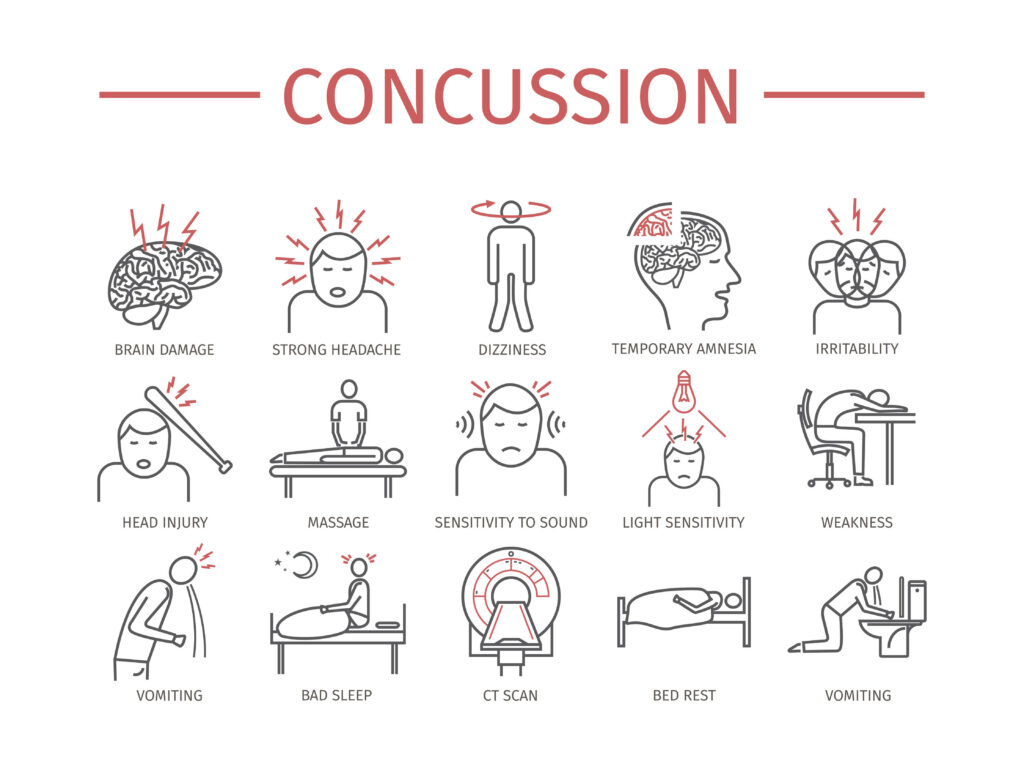
What are the three general categories of concussion symptoms?
Concussion symptoms can vary from person to person. Some people experience mostly physical symptoms, while others struggle more with cognitive or emotional problems.
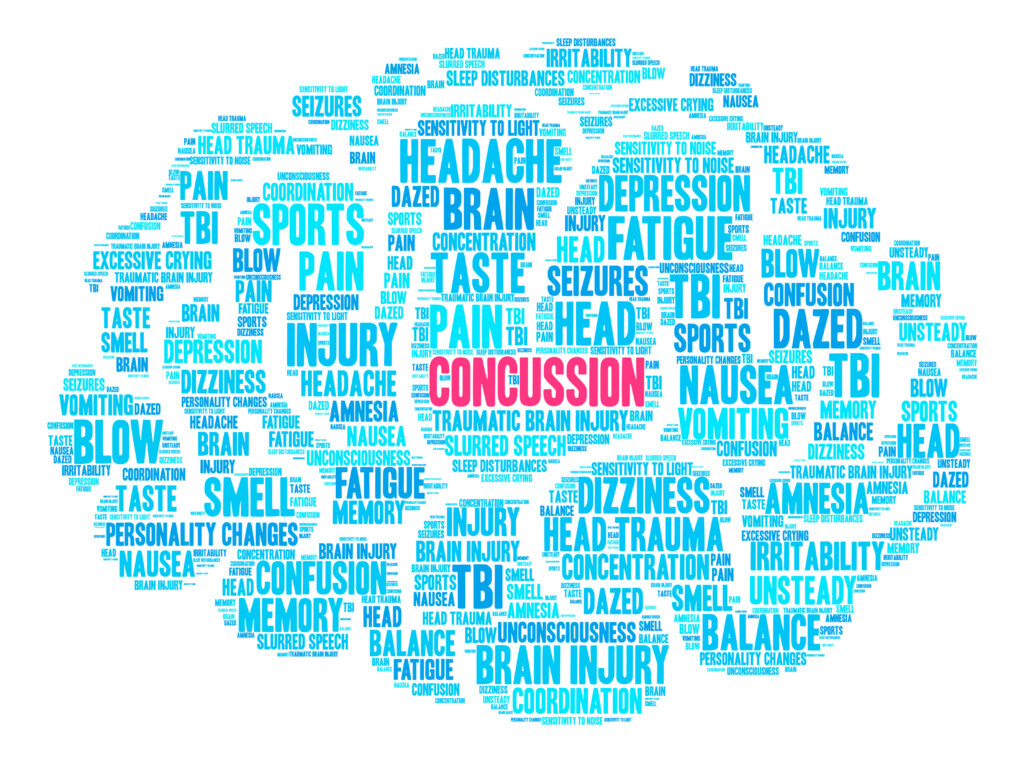
- Physical: symptoms include headaches, dizziness, nausea, blurred vision, balance problems, fatigue, and sensitivity to light or sound.
- Cognitive: symptoms may include memory problems, difficulty concentrating, slowed thinking, confusion, or mental fatigue.
- Emotional: Some individuals become irritable, anxious, depressed, emotionally sensitive, or easily overwhelmed after the injury. Sleep disturbances frequently occur as well.
One of the most frustrating aspects of a concussion is that the injury is often invisible. A person may look perfectly healthy while privately struggling with headaches, exhaustion, memory issues, or concentration problems every day.
Why CT Scans and MRIs are often normal
Many people assume if a CT scan or MRI is normal, there is no real brain injury. That is incorrect. Standard imaging studies are designed to identify major structural problems such as bleeding, swelling, fractures, or large areas of tissue damage.
Concussions, however, usually involve microscopic and functional injuries occurring at the cellular level. Those changes frequently do not appear on routine imaging tests.
As a result, many concussion patients may seem to have completely normal scans despite experiencing very real symptoms. Experienced brain injury professionals and brain injury lawyers understand that normal imaging does not rule out a concussion or brain injury on a microscopic level.
What is the brain injury recovery process?
During the early recovery period (90 days), the brain is generally in its most active phase of healing. The brain has an amazing capacity to heal itself. Neuroplasticity is the term used to describe the brain’s ability to change, adapt, and reorganize its structure and neural pathways throughout your life. Neuroplasticity assists in the healing process by helping the brain form new pathways around the damaged areas, with most people returning to normal functioning over weeks and months.[3]
Proper care is essential during this recovery period. Rest, quality sleep, hydration, good nutrition, less brain stimulation, less TV and computer time, symptom management, and avoiding additional head trauma all help support recovery. Some individuals may also benefit from physical therapy, vestibular therapy, cognitive rehabilitation, or other specialized treatment depending on their symptoms.[3]
Why do brain injury symptoms sometimes persist: Post-concussion syndrome
Although most people improve within the first three months, recovery often slows after that point. Healing does not necessarily stop, but progress may become slower and more difficult.
Some individuals continue experiencing headaches, cognitive fatigue, memory problems, dizziness, emotional changes, and sleep disturbances long after the initial injury. This is often referred to as post-concussion syndrome or persistent post-concussive symptoms.
Persistent symptoms can interfere with nearly every aspect of life. Returning to work may become difficult because concentration and multitasking are impaired. Students may struggle academically because reading and processing information requires much more effort than before.
Relationships can also become strained. Family members may not fully understand why the injured person seems more emotional, forgetful, irritable, or withdrawn. Many concussion victims describe feeling like they are no longer the same person they were before the injury.
Why proper evaluation matters
Brain injuries are medically complex, and not every healthcare provider fully understands them. Proper evaluation may require neurological examinations, neuropsychological testing, vestibular testing for balance and dizziness, cognitive assessments, cognitive behavior therapy, or general rehabilitation services.
Early diagnosis and appropriate treatment can make a meaningful difference in recovery.
From a legal standpoint, concussion cases can also be challenging because the injuries are often misunderstood or minimized. Insurance companies sometimes argue that the injured person cannot be seriously hurt because they “look fine” or because imaging studies are normal.
An experienced brain injury attorney understands how to document symptoms, work with medical specialists, and explain the real-world impact these injuries can have on a person’s daily functioning and future quality of life.
Final thoughts
A concussion and a mild traumatic brain injury are the same thing. Although these injuries are classified as mild, they can have serious physical, cognitive, emotional, and financial consequences and can persist.
Most people improve with time and proper care, particularly within the first 90 days after the injury. However, some individuals continue struggling with symptoms long after the original trauma.
Understanding the true nature of concussions is important because these injuries are often invisible, misunderstood, and underestimated. Taking concussion symptoms seriously from the beginning can make an important difference in both recovery and long-term outcomes.
Stay safe out there!
Charlie Waters
More questions…
- Why do I feel okay right after my accident but worse today? Read more…
- What happens inside the brain after a concussion? Read more…
- What symptoms may continue, and should I be concerned? Seek help…
Sources:
- Vol57,https://www.sciencedirect.com/science/article/abs/pii/S1071909126000045, April 2026.
- Cleveland Clinic, https://my.clevelandclinic.org/health/articles/22513-neurotransmitters, March 2022.
- National Institute of Health, Matt Puderbaugh; Prabhu D. Emmady. https://www.ncbi.nlm.nih.gov/books/NBK557811/, May 2023.